

ABOUT ANTHROTOPIA
Anthrotopia is a curated platform that brings together diverse perspectives from art, design, science, and beyond to reimagine humanity’s role within a more-than-human world. It explores new ways of thinking, relating, and living. Anthrotopia is a space for inspiration and reflection that seeks to contribute constructively to the ongoing conversation about possible futures and the conditions that shape them. Curious about the ideas behind Anthrotopia? Explore the sections below for a deeper introduction, or continue directly to the platform and discover its diverse content.
As ecological crises intensify, the human–nature relationship is being called into question. Familiar distinctions between nature and culture, human and non-human life, and natural and artificial systems are becoming increasingly porous. The challenges we face are not isolated problems but complex, interwoven realities spanning ecological, technological, cultural, and social dimensions. Such complexities cannot be adequately understood through the lens of any single discipline alone. Rather, they require integrative and open approaches that bring different forms of knowledge into dialogue, revealing the interdependencies that shape our world and inviting a more relational understanding. To see the world as relational is to recognise ourselves as part of it rather than separate from it. By connecting perspectives from art, design, science, and beyond, Anthrotopia explores how these intersections can generate new ways of understanding and responding to the deeper questions that emerge: What is our place within an entangled world, and what might that imply for the futures that arise from it?
The name Anthrotopia emerges from these fundamental questions. It joins the root anthro, from the Greek ánthrōpos (human), with -topia, from tópos (place), while also echoing utopia, derived from both ou-topos (no place) and eu-topos (good place).
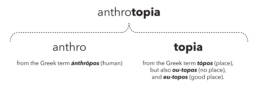
The name invites reflection on the human place in the world and the ways in which that place might be understood, negotiated, and reimagined. Anthrotopia seeks to move beyond human-centered worldviews while acknowledging that we remain embedded within the very systems we both shape and depend on. Rather than proposing a fixed vision, it opens a space for exploring how humans might inhabit the world differently and more responsibly in relation to the many forms of life and systems with which we coexist.
Anthrotopia emerged from a long-standing exploration by its founders, Ingrid Rügemer and Oliver Szasz, rooted in creative practice and design research – informed by the humanities and in dialogue with scientific inquiry. Working across these domains revealed both the distinct epistemic orientations and strengths of different disciplines, as well as the limitations of approaching complex questions through disciplinary frameworks alone. While scientific knowledge is indispensable for understanding planetary processes, it cannot fully account for the cultural, experiential, and imaginative dimensions through which we relate to the world. Creative and applied practices offer complementary modes of inquiry that engage perception, materiality, speculation, and lived experience. Anthrotopia is grounded in the conviction that diverse forms of knowing should not remain separate or hierarchical, but be brought into relation as complementary epistemic cultures capable of generating new insights. In this sense, Anthrotopia adopts a post-disciplinary perspective – one that moves beyond established boundaries without dissolving the distinct strenghts of each field.
Through its curatorial approach, Anthrotopia traces, contextualises, and presents contributions that engage contemporary ecological, aesthetic, and societal questions from within a more-than-human horizon. As an evolving platform, it situates concepts, theories, and practices within a dynamic field of inquiry. In doing so, Anthrotopia aims to expand perception, reframe agency, and foster new ways of thinking about coexistence.
At the heart of Anthrotopia lies the conviction that today’s challenges call for transdisciplinary forms of inquiry that connect diverse modes of knowing. Our Spheres of Inquiry visualise the conceptual landscape that guides Anthrotopia’s exploration.
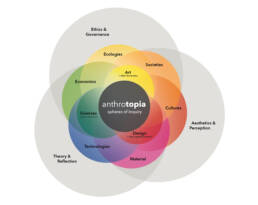
Three complementary knowledge cultures form the core of our inquiry: art (and other humanities), design (and other applied practices), and science (all forms, such as natural, social and formal) – each offering distinct ways of perceiving, questioning, and shaping the world. Together they cultivate aesthetic sensitivity, systemic imagination, and analytical understanding.
Around this core lie diverse domains of interaction: material, technological, ecological, economic, and societal. Here, ideas encounter practice, where concepts are tested through matter, systems, and lived experience, revealing the complex entanglements that shape our shared planetary condition.
Encircling these layers are frames of critical responsibility: aesthetics and perception, theory and reflection, ethics and governance. These provide the critical perspectives through which knowledge is interpreted, questioned, and oriented toward meaningful action.
Taken together, these spheres form a relational ecosystem of inquiry that invites dialogue, engages complexity, and opens pathways for imagining regenerative futures within a more-than-human world.
START EXPLORING
The Anthrotopia platform presents projects, publications, conversations, and other forms of inquiry that inspire new ways of thinking about coexistence. Alongside this curated content, Anthrotopia develops and shares perspectives of its own through essays and self-initiated projects. Whether you come with curiosity or follow a line of research, we invite you to reflect with us on what it means to live within a more-than-human world.
Anthrotopia Essay #2
Arthur Lovejoy, Gregory Bateson, and the challenge of finding our place within a living world. The two thinkers, Arthur Lovejoy and Gregory Bateson,…
The Emergence of Nature-Centred Design
Cultivating an interdisciplinary, nature-centred design paradigm. Over the past few years, concepts such as regenerative design, more-than-human…
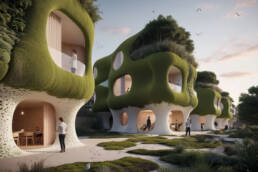
Designing for Mutual Benefit
Reimagining Design Through the Lens of Symbiosis. As ecological crises deepen and the limitations of conventional sustainability become increasingly…
Anthrotopia Essay #01
From Separation to Participation. Trees exchange nutrients through underground fungal networks. Insects pollinate flowers. Rivers shape landscapes.…

Become Ocean
When Art Changes Perception. Some artistic works entertain. Others tell stories. A few invite us to reconsider our place in the world. Become Ocean,…
Rethinking Aesthetics
More-Than-Human Aesthetics: Venturing Beyond the Bifurcation of Nature. The book, edited by Melanie Sehgal and Alex Wilkie, marks a inspiring…
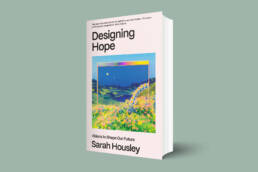
Future as a Space of Possibility.
When Did We Stop Dreaming About Better Futures? For much of the twentieth century, visions of tomorrow were closely tied to ideas of progress,…
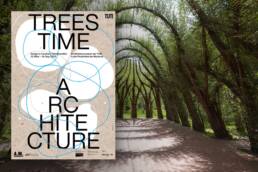
Trees, Time, Architecture!
Design in Constant Transformation. Presented at the Architecture Museum of the Technical University of Munich (TUM) in the Pinakothek der Moderne,…
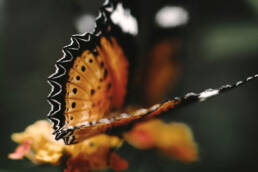
Working with Nature to Shape Tomorrow
Transpecies Design: Design for a Posthumanist World. The book, edited by Adrian Parr Zaretsky and Michael Zaretsky, invites readers to rethink…

Circularity as Design Principle
Biodegradable Material Archives: Tools for Regenerative and Circular Design. In today’s design landscape, selecting materials involves more than…
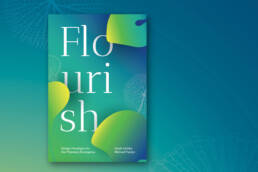
Um(Welt)Denken – International Doctorate Programme
Where Humanities Meet Ecological Transformation. Situated at the intersection of ecological awareness and cultural transformation, the international…
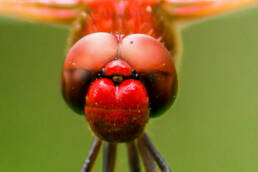
More-Than-Human Perspectives
Rethinking Data: Toward More Engaged and Creative Research Practices. Phillip Vannini’s book, Non-representational and More-than-human Research –…
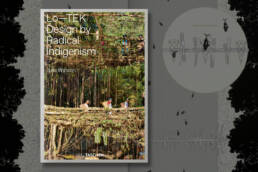
Lo–Tek: Design by Radical Indigenism
Rethinking Technology through Ancestral Intelligence. What if the future of design lay not in smart cities or artificial intelligence, but in…
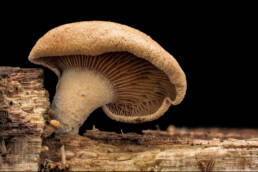
Exploring Fungi at the Intersection of Science and Art
Vera Meyer (V. meer): Scientist, Artist & Fungi Visionary. Vera Meyer, also known by her artistic pseudonym V. meer, is a remarkable figure at…

Towards the Symbiocene?
Imagining Symbiocentric Futures: International Scholars at the 10th Futurologie Symposium. Oliver Szasz, co-founder of Anthrotopia and former…

Towards an Ecological Turn
Online Talk Event: 10 May 2023, 15:00 – 18:00 (CEST). Oliver Szasz, co-founder of Anthrotopia, organized and hosted the panel discussion “Towards…
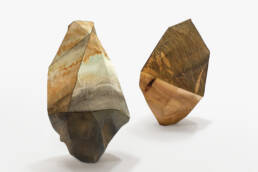
Objects of Human-Nature Dialogue.
Material Culture and Transformative Change Ingrid Rügemer, co-founder of Anthrotopia and one of the founding partners of Culturesphere, curated the…
RE-IMAGINE – Presentation at the RCC
Transformative Imaginaries: Rethinking Futures Through Art and Design. As part of the Rachel Carson Center’s esteemed Tuesday Discussion Series,…
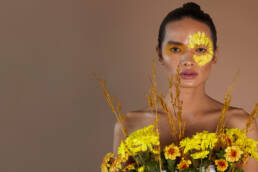
MA Responsible Fashion
A new postgraduate programme starts in autumn 2023 at Istituto Marangoni, London. Why MA Responsible Fashion? It has never been more important for…

Phytophilia Design Conversation
Shaping the Future: Regenerative Design and the Role of Material Culture. Designers have always contributed to shaping material culture, which makes…
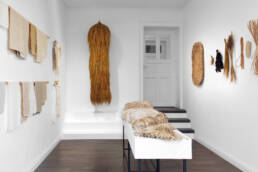
Phytophilia Exhibition
Phytophilia – an exhibition with Danish Designer Sara Martinsen. The exhibition presented sculptural objects by Sara Martinsen alongside her Material…
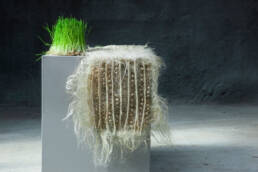
Interview: Zena Holloway
Grown from Root – Sustainable, Sculptural, Wearable! Zena Holloway explores the interweaving properties of root systems and crafts unique artefacts,…
Stuart Walker – Designing Sustainability
Designing Sustainability via Progressive Design Praxis by Guest Author Stuart Walker. Introduction Design can be understood as a discipline that…
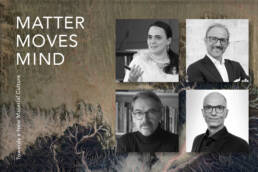
Matter Moves Mind – Talk
Material Culture and Transformative Change. The panel discussion “Matter Moves Mind– Towards a New Material Culture” was conceived and hosted by…
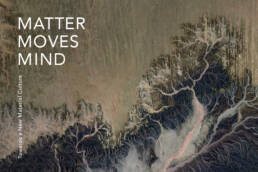
Matter Moves Mind – Exhibition
Material Culture and Transformative Change. “Matter Moves Mind: Towards a New Material Culture” was curated by Ingrid Rügemer, co-founders of…

The Human Insect
People – Nature – Future Talk Series: In this talk Mark Wigley explores the uncanny fact that humans became insects at the end of the 19th century…
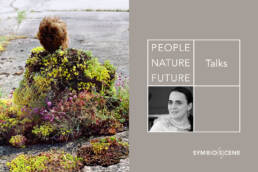
Green Like a Robot
People – Nature – Future Talk Series: In this talk, Dr. Lora Koycheva offers an anthropological perspective on the currently dominant human-centered…

Biodiversity and Wellbeing!
People – Nature – Future Talk Series: In this presentation, Prof. Dr. Aletta Bonn talks about the close link of biodiversity with health and…
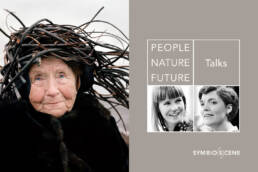
Talk with Eyes As Big As Plates
Exhibition Walk-Through & Artist Talk This recording features a walkthrough of the exhibition People – Nature – Future by artist duo Riitta…
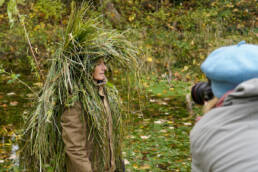
People, Nature, Future – Art Project
The Making of the “People, Nature, Future” Photo Art Project. The exhibition People, Nature, Future, featuring the Scandinavian artist…
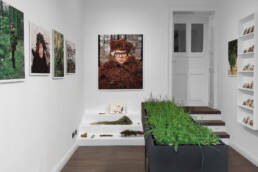
People – Nature – Future
From Landscapes to Sculptural Portraits: Artistic Dialogues with Nature. The exhibition People – Nature – Future presented the internationally…

MA Regenerative Design
A new postgraduate course starts at Central Saint Martins College, London. Why this course? Course founder Carol Collet and her team believe that…
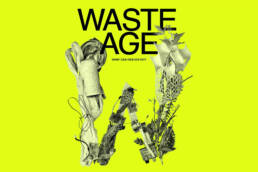
Waste Age – Exhibition
Waste Age – What can design do? – A Visionary Exhibition at the Design Museum. The Design Museum in London hosted Waste Age: What Can Design…
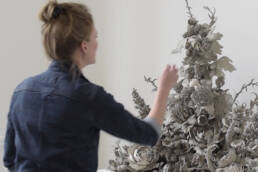
Interview: Phoebe Cummings
The beauty of the present moment and the briefness of existence. Ceramic sculptor Phoebe Cummings works mainly with unfired clay. Her intricate and…

Cosmo Sheldrake: Wake-up Calls
Music with and for nature. Multi-instrumentalist musician, composer and producer Cosmo Sheldrake dedicates his album Wake-Up Calls to endangered bird…

Silence of the Tides
Flowing with the Wadden Sea and reflecting on our bond with nature. Silence of the Tides – a breathtaking documentary by Pieter-Rim de Kroon that…
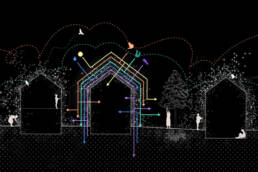

Connect with Nature: Mud & Mindfulness
Dorodango (Japanese: “mud dumpling”) Hikaru Dorodango are shiny balls of mud, molded by hand, dried, and polished into artifacts of utter…
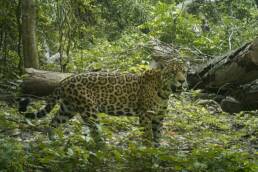
Master’s Student Project Senckenberg
M.A. Design Management students from Macromedia University Munich were asked to support Dr. Martin Jansen from Senckenberg Naturmuseum Frankfurt with…

Economy for the Common Good
Mini Symposium on Economy for the Common Good. Prof. Oliver Szasz, head of the M.A. Design Management program at Macromedia University Munich, hosted…
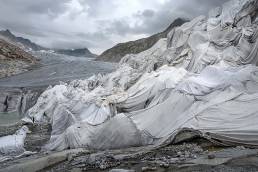
Vienna Biennale for Change
CLIMATE CARE: Reimagining Shared Planetary Futures. Planet Love – this was the guiding idea behind the MAK Museum’s exhibition CLIMATE CARE, part…
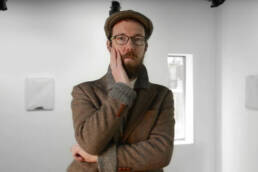
Forest is the Artist
What does it mean when we say that “nature” is the artist? To explore this question, American ecological artist, filmmaker and author…

Envisioning Cities
Step into the future! The development of visions and scenarios is a key driver in shaping what lies ahead. What will our cities look like? How can we…
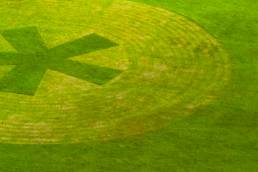
National Park Cities?
London became the first National Park City in July 2019. This community-driven movement celebrates and supports the actions of millions of people in…
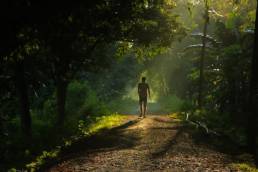
Forest Man
One man and his forest. Since 1979, Majuli Islander Jadav Payeng has been planting trees to save his island. To date, he has single-handedly planted…
Cities, Nature, Poetry
Sprout – The eco-urban poetry journal presents its first issue, dedicated to the theme SPACE. “In inviting new work to reflect…
Ove Arup Foundation
Collaboration, Interdisciplinarity and Sustainability. These are the values of the Ove Arup Foundation and the driving forces behind its Catalyst…
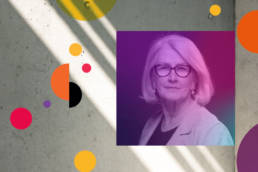
NESTA TALK: Ann Pettifor
Why Radical Change is Required to Address the Climate Crisis. Why Radical Change Is Required to Address the Climate Crisis Nesta, the renowned…
Dennis Meadows – Limits To Growth
A Study Ahead of Its Time. In 1970, scientist Dennis Meadows and an international team of researchers at the Massachusetts Institute of Technology…
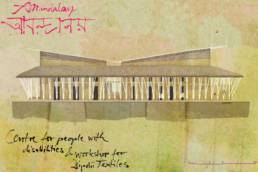
Architecture & The Common Good
Obel – A foundation Recognising and Rewarding Architecture’s Potential to Act as Tangible Agents of Change. The Obel Foundation, established in 2019…
World Hope Forum
The World Hope Forum was launched on October 24 in 2020 during Dutch Design Week, during the depth of the pandemic caused by Covid-19 and founded by…
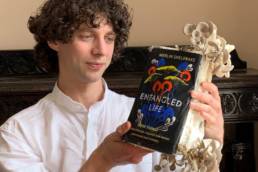
Entangled Life by Merlin Sheldrake
How Fungi Make Our Worlds, Change Our Minds and Shape Our Futures. Merlin Sheldrake’s book Entangled Life has received enthusiastic reviews from the…
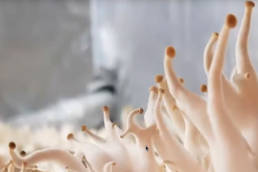
Fungi Futures
Movements in Mycelium – From Plastic-Waste-Eating Solutions to Growing Structural Potentials The live-streamed talk, hosted by artist, inventor, and…
Cambio – Ecology and Design
A re-evaluation of our relationship to trees from a design perspective. Cambio is a long-term design research project by design duo Formafantasma…
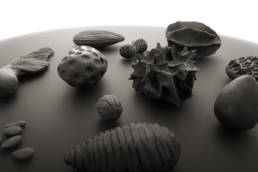
Seeding Sustainable Futures
The power of embodied metaphors. Seeding Sustainable Futures – a project by Culturesphere – explored the potential of individuals to contribute to…
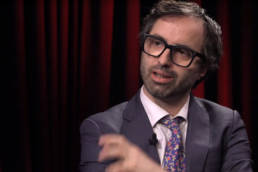
Life of Plants by Emanuele Coccia
A philosophical perspective on plants. Emanuele Coccia, Associate Professor in the History of Philosophy at the EHESS in Paris, presents his book…