Reimagining Design Through the Lens of Symbiosis.
As ecological crises deepen and the limitations of conventional sustainability become increasingly apparent, a growing number of thinkers and practitioners are searching for new frameworks capable of guiding the transition toward regenerative futures. Among the most compelling of these is the concept of the Symbiocene – a vision of an era in which human societies, technologies, and economies are re-embedded within the living systems that sustain them. While such ideas often remain at the level of philosophy, the question remains: how can they be translated into practice? One attempt to answer that question comes from Australia’s Symbiocene Institute and its recently released Symbiocene Design Guide.
A Guide for Life-Centred Design
Rather than asking how products, services, and systems can become less harmful, the Symbiocene Design Guide explores how design can actively contribute to the flourishing of life. Developed in collaboration with designers, sustainability practitioners, and systems thinkers, the guide introduces a set of principles, tools, and case studies intended to help organizations move beyond extractive models toward regenerative and mutually beneficial relationships. It is not a prescriptive methodology, but a framework for reimagining design through the lens of ecological interconnectedness, encouraging practitioners to consider the wellbeing of entire living systems rather than human users alone.
The Symbiocene Design Guide encourages designers, innovators, and organizations to rethink how products, services, and systems might contribute to relationships of mutual benefit rather than extraction. It provides practical guidance for designing in partnership with nature and fostering conditions that support life and regeneration.
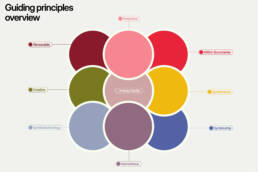
The Symbiocene Design Guide is built around a framework of principles that widens the design lens beyond human users to include nature’s systems and future generations. These principles help practitioners embed ecological reciprocity, regeneration, and long-term thinking into design decision-making.
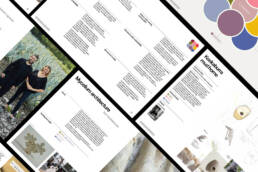
It introduces new design approaches intended to help practitioners move from inspiration to action and highlights 50 real-world examples. These case studies demonstrate how Symbiocene principles can be applied across different sectors, scales, and contexts to create positive social and ecological outcomes.
The People Behind the Vision.
The intellectual foundations of the guide can be traced to the Australian environmental philosopher Glenn Albrecht, who introduced the Symbiocene as a hopeful alternative to the Anthropocene. While the Anthropocene describes humanity’s growing impact on planetary systems, the Symbiocene imagines a future shaped by reciprocity, cooperation, and mutual flourishing between humans and the more-than-human world. Helping to translate this vision into practical action is Andy Marks, founder and executive director of the Symbiocene Institute. Through partnerships, research initiatives, and educational programs, Marks and his collaborators are working to transform the Symbiocene from an inspiring concept into a framework that can inform real-world decisions across design, business, and policy.

Glenn Albrecht, environmental philosopher and author of the book Earth Emotions, coined the term Symbiocene. He describes it as an era in which “life works with life to further life.” This phrase encapsulates the central vision of the Symbiocene: a future in which human well-being and ecological flourishing are deeply interconnected and mutually reinforcing.
Why this matters for Anthrotopia?
Many of the projects and ideas featured on Anthrotopia share a common ambition: to explore pathways toward futures in which human creativity, technology, and culture are aligned with the living systems that sustain them. The Symbiocene Design Guide contributes meaningfully to this conversation. Rather than focusing solely on reducing environmental harm, it invites a deeper question: how might our products, organizations, and institutions actively participate in the flourishing of life? In that sense, the guide represents more than a design framework. It forms part of a growing effort to develop the concepts, practices, and narratives needed for a regenerative and life-centred future.
Images: © Symbiocene Institute